Product Development · 4 min read · Buyer questions: Q0107, Q0269
What to Include in a Custom Running Shirt Tech Pack
Give the supplier one controlled source for shape, measurements, fabric, construction, artwork, labels and packaging, then recheck fit whenever a material changes.
The decision in one paragraph
A useful running-shirt tech pack connects the commercial product to measurable instructions: drawings, measurement points, size rules, material and trim references, construction, artwork, labels, packaging and version history. It also identifies which fields are targets and which are already approved.
Make the tech pack the controlled source
The objective is not to create the longest document. It is to prevent the supplier, buyer and inspector from working from different assumptions. Put the style name, reference, owner, revision and status on every issued pack.
Separate approved requirements from supplier proposals. Highlight changes between versions and withdraw superseded files from the active order folder.
Include the fields that drive the product
| Section | Minimum useful content | Common ambiguity to remove |
|---|---|---|
| Product identity | Style name, reference, use, fit and colourways | Whether one drawing covers men, women or youth |
| Drawings | Front, back and relevant details | Panel, seam, hem and collar interpretation |
| Measurements | Named points, method, base size and tolerance | Body measurement versus garment measurement |
| Materials | Main and panel fabrics, colour, finish and supplier reference | Generic “performance polyester” wording |
| Construction | Seam, stitch, edge and reinforcement requirements | Supplier default used without review |
| Artwork | Files, scale, placement and colour reference | Mock-up treated as production art |
| Labels and packing | Content, position, folding and carton marks | Retail elements assumed to be included |
Define measurements so another person can repeat them
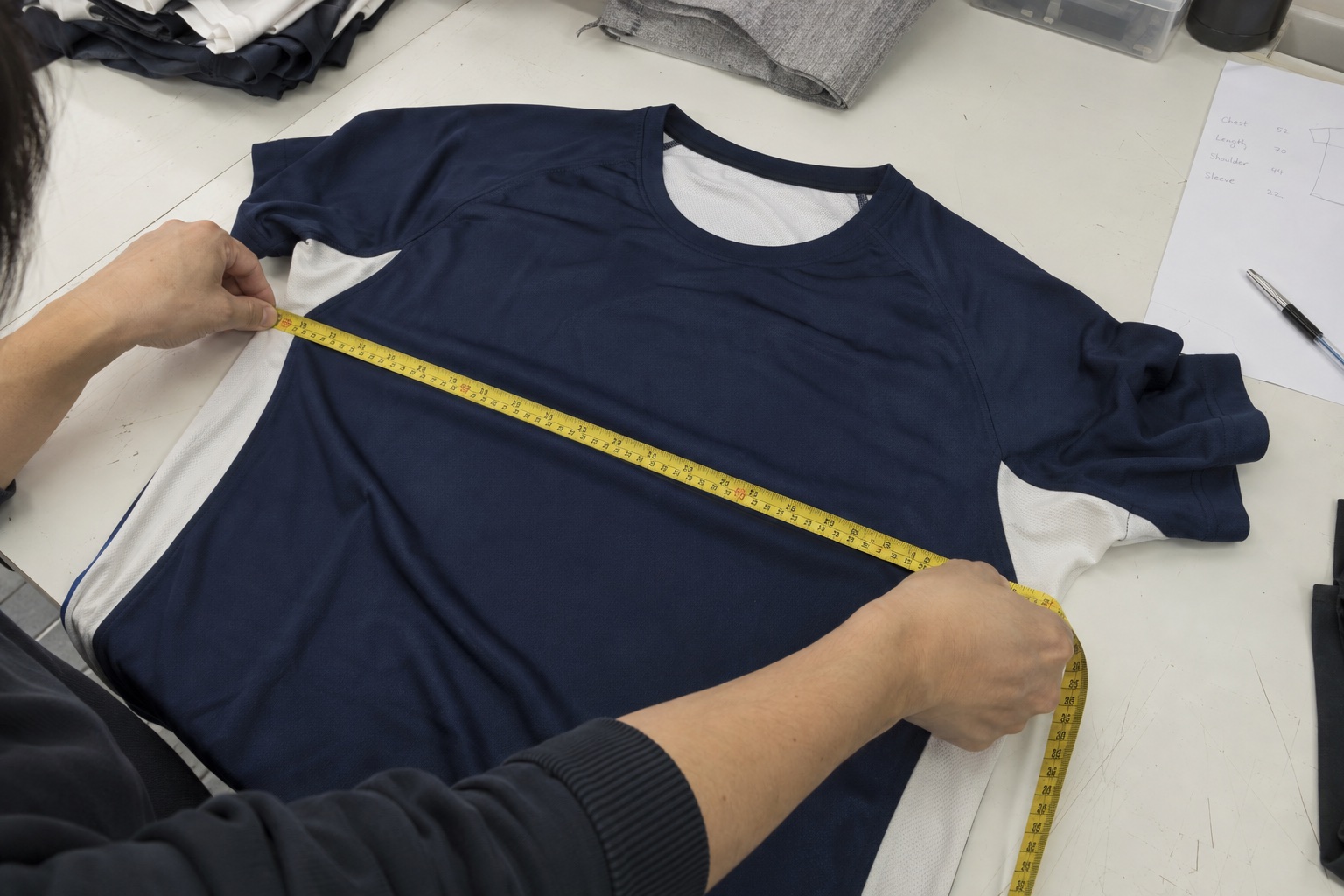
A measurement name alone is not always enough. Add a small diagram or written method showing the start and end points, garment position and whether the garment is relaxed or extended. ISO 8559-1 gives anthropometric definitions for body measurement; a product tech pack should still distinguish body dimensions from finished-garment measurements.
For graded sizes, show the base size and grade rule or provide the complete measurement table. Identify tolerances separately from grade increments.
Control artwork and print inputs
Include the final-size placement, colours, fonts, sponsor marks, variable names or numbers and any repeat artwork. Link or embed the correct assets. Adobe’s print-production guidance recommends checking links, fonts, resolution, bleed and output settings; the supplier’s required production format should also be confirmed.
A visual mock-up explains intent but may not contain production-ready scale, paths or colour information. Label it accordingly.
Recheck fit when the fabric changes
Changing fabric can change stretch, recovery, thickness, drape, shrinkage and how seams behave. Keep the desired fit as the objective, but do not assume the old pattern automatically delivers it in a new material.
Issue a revised material section, record the reason for change, identify measurements or construction that may be affected and agree whether a new fit or pre-production sample is required. Keep the previous approved version for comparison rather than overwriting it.
Issue a quotation version and a production version
The RFQ pack may contain targets and supplier questions. The production pack must reflect the selected materials, approved artwork, final measurements and agreed corrections. The order should refer to the production revision explicitly.
KITRAVA can review an existing technical pack or an earlier product brief. Feasibility, development work, samples, MOQ and timing remain product-specific and are confirmed in writing.
What to confirm for your project
- Style reference, revision and approval status
- Repeatable garment measurement methods
- Named main, panel and trim materials
- Construction and artwork details
- Labels, packaging and market inputs
- Change log and new-sample decision after material changes
Questions to carry into supplier review
- Should colourways use separate artwork pages?
- How should player names and numbers be supplied outside the core tech pack?
- Which supplier proposals must be converted into final specifications before production?
Standards and primary references
- ISO 8559-1:2017 — Anthropometric definitions for body measurement
- Adobe — Produce print-ready PDF files in InDesign
- ASTM textile standards catalogue
These references support the comparison method. They do not certify a KITRAVA product, facility or test result.